Dimension 03 · The DOES Model
Execute
Where commitment meets consequence
Execute converts intention and structure into visible delivery, adaptation, and results the organization can be judged by.
Execute is the point where an organization stops describing itself and starts proving itself. Direction has been set and roles have been arranged, so the only question left is whether commitments can survive contact with real conditions: volume, time pressure, shifting information, and interdependence. What was ambiguous in earlier work does not stay hidden here. It shows up as delay, rework, drift, or exhausted people.
This dimension fails quietly at first. Leaders read the strain as a motivation problem and respond with more meetings, more reporting, and more pressure, mistaking visibility for improvement. Standards drift because no one owns the frame around the work. Decisions arrive late because thresholds were never made clear. Projects lose coherence because dependencies were never named. Measurement multiplies without making anything easier to see or fix.
When Execute is strong, the organization feels different in ways that are hard to fake. Escalations are cleaner because people know what crosses a threshold. Ownership feels firm without feeling punitive, because authority and consequence line up. Progress reviews change behavior instead of narrating it, and recurring obstacles get diagnosed rather than merely discussed again.
None of this makes Execute a purely mechanical stage of leadership. It carries its own judgment, its own failures, and its own capacity to either compound earlier weakness or absorb it. Strong execution is what allows an organization to earn trust from customers, employees, and markets, because all three groups experience the organization mainly through what actually gets delivered.
In this dimension
6 competencies
Across Levels of Work
- Level 1 — Quality Execution means delivering accurate, safe, on-time work and catching variance before it travels downstream.
- Level 2 — Service Execution becomes coordinating, holding service steady across handoffs, sequencing, and adjustments within policy.
- Level 3 — Practice Execution tests whether the method itself can carry the work, through disciplined improvement or, when the method is aging out, disciplined experimentation.
- Level 4 — Strategic Development Execution becomes systemic, coordinating multiple workstreams and interdependent commitments across a longer horizon.
- Level 5 — Strategic Intent Execution shapes institutional credibility, proving that a chosen direction can be delivered and sustained without breaking trust.
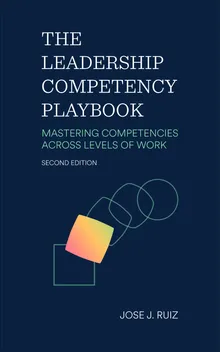
Second Edition — available now
Read the second edition
Twenty-four competencies, read through the DOES cycle and the Levels of Work. The full architecture, chapter by chapter.
Available in paperback and Kindle.