Dimension 02 · The DOES Model
Organize
Turning chosen direction into usable capacity
Organize converts a chosen direction into roles, decision rights, resources, and rhythms the system can actually carry.
A leadership team can leave a strategy session genuinely aligned and still watch execution stall a few weeks later. Decisions stick at the boundaries between departments, work gets duplicated because ownership was never made explicit, and meetings become the only place real calls can be made because the surrounding structure cannot carry them on its own. Leaders often mistake this for a culture or communication problem, when the deeper issue is that a sound direction has not yet been organized well enough to travel.
Organize is the work of converting an agreed direction into capacity that people can actually use: placing individuals where their judgment matters, clarifying who decides what, building forums where cross-cutting issues get resolved before they harden into friction, and setting up coordination that does not depend on a handful of tireless people. Without that conversion, strong strategy quietly becomes dependent on proximity, persuasion, and rescue behavior from a few overloaded managers.
Weak organizing rarely announces itself directly. It shows up as recurring escalation, as competent people negotiating ambiguity that should have been resolved structurally, and as trust eroding at unclear interfaces rather than because anyone lacked commitment. Org charts alone cannot fix this, because a chart can look tidy while concealing where coordination actually has to happen.
When organizing is strong, the feel of the place changes before any dashboard does. Complaints that sound personal turn out to have structural causes that get fixed. Managers spend less time translating contradictions between groups and more time improving the work itself, and cross-functional tension becomes productive rather than a permanent drag on the system.
In this dimension
6 competencies
Across Levels of Work
- Level 1 — Quality Organizing means keeping handoffs clean and immediate work orderly so output stays trustworthy.
- Level 2 — Service The work becomes coordinating: sequencing effort and protecting a consistent experience across a broader rhythm of people.
- Level 3 — Practice Organizing shifts to redesigning how work travels, whether tightening existing interfaces or building routines that do not yet exist.
- Level 4 — Strategic Development Organizing becomes architectural: roles, forums, and resource placement must be integrated across functions over multi-year horizons.
- Level 5 — Strategic Intent Organizing shapes the institution itself, testing whether direction is matched by an arrangement able to bear real scale.
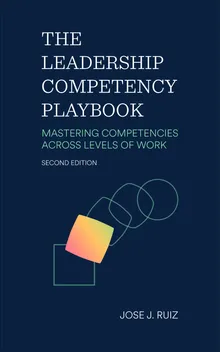
Second Edition — available now
Read the second edition
Twenty-four competencies, read through the DOES cycle and the Levels of Work. The full architecture, chapter by chapter.
Available in paperback and Kindle.